Choosing the right bandsaw blade is one of those things that can instantly transform your woodworking—just like switching from a dull pencil to a fine mechanical one. The bandsaw may be the star of your workshop, but the blade determines the real performance.
This guide breaks down everything you need to know in a simple, practical way so you can pick the perfect blade for any woodworking project.
Why the Right Bandsaw Blade Matters
The blade controls how fast you cut, how smooth the surface turns out, and whether tight curves or straight lines come out clean—or messy.
Think of your blade as the “brush” of your woodworking: the better the brush, the better your craftsmanship.
Tip: If your cuts burn, wander, or look rough, the problem is usually the blade, not the bandsaw.
Key Factors to Consider When Choosing a Bandsaw Blade
1. Blade Tooth Type & TPI (Teeth Per Inch)
Tooth Type Explained
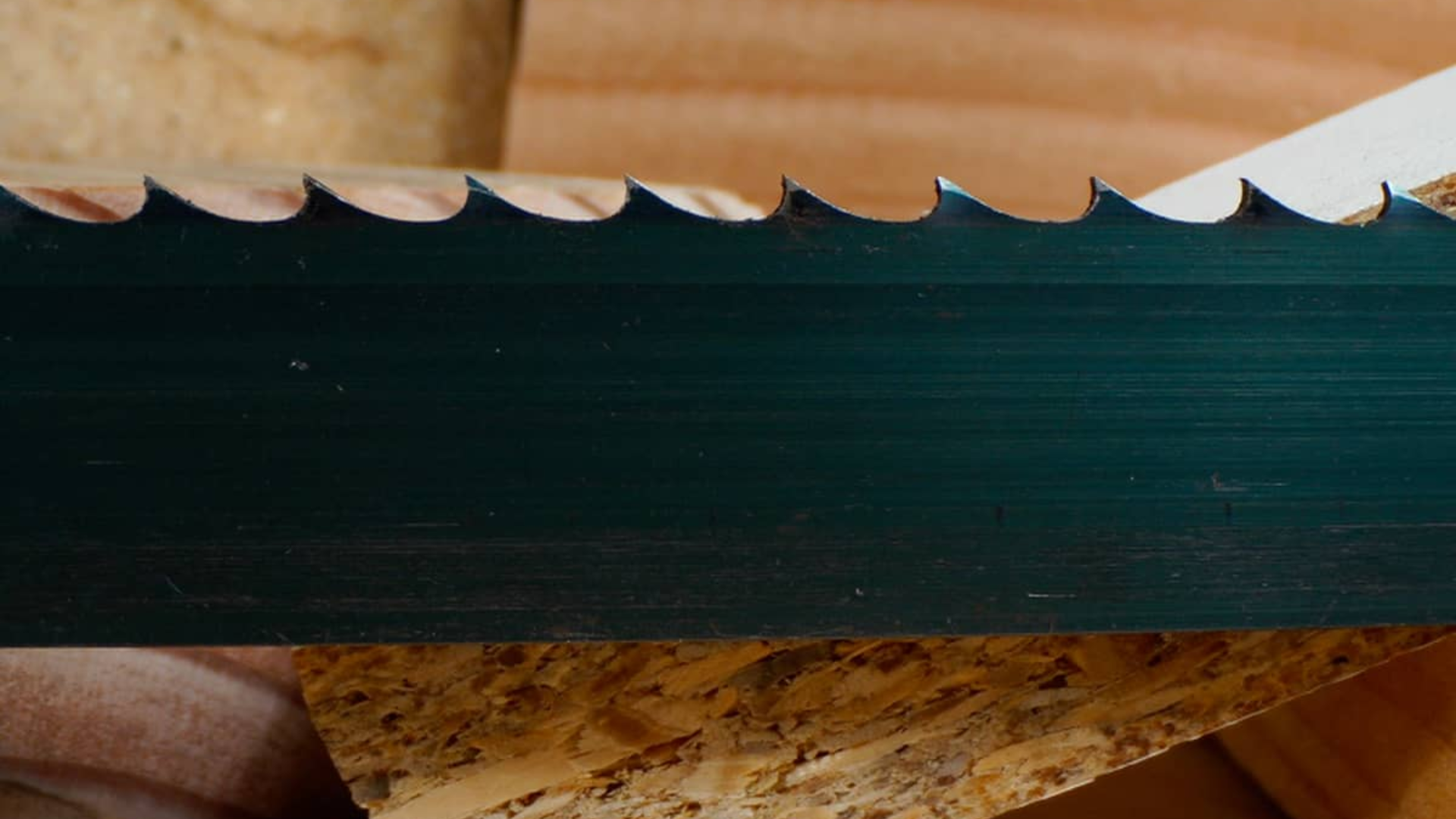
The tooth shape affects chip removal, cut smoothness, and speed.
Common tooth shapes include:
Regular tooth – general-purpose cutting
Hook tooth – faster cuts, aggressive feed
Skip tooth – ideal for softwoods, reduces clogging
Understanding TPI
TPI determines how rough or smooth your cut will be.
Low TPI (2–6): Fast cuts, rough finish
Medium TPI (6–10): Balanced speed and cleanliness
High TPI (10+): Smooth finish, slower cutting
Analogy:
Think of TPI like sandpaper grit—coarse for fast removal, fine for a clean finish.
Tip: For woodworking, 6–10 TPI is the sweet spot for most general tasks.
2. Blade Width—Stability vs. Flexibility
How Width Affects the Cut
Wider blades (¾” – 1”) = straighter cuts, resawing, ripping
Narrow blades (⅛” – ⅜”) = tight curves, scroll-like shapes
General Rule
The tighter the radius you want to cut, the narrower the blade must be.
Tip: If you're resawing thick lumber, use the widest blade your saw can safely handle.
3. Blade Material—Carbon vs. Bi-Metal vs. Carbide
Carbon Steel Blades
Affordable, flexible, and great for everyday woodworking.
Perfect for cutting:
Pine
Plywood
General hardwood
Bi-Metal Blades
Stronger and longer-lasting thanks to a high-speed steel cutting edge.
Ideal for:
Hardwoods
Frequent cutting
High-tension operations
Carbide-Tipped Blades
These are the premium choice—ultra durable, long-lasting, and excellent for heavy-duty cutting or milling.
Great for:
Dense exotic hardwoods
Resawing wide boards
Tip: If you resaw often, carbide-tipped blades are worth every penny.
How to Match the Blade to Your Woodworking Task
Straight Cuts and Resawing
Choose:
Width: ¾”–1”
Tooth type: Hook
TPI: 3–4
Good for producing smooth, consistent veneers or ripping long boards.
Curved or Intricate Cuts
Choose:
Width: ⅛”–¼”
Tooth type: Skip or regular
TPI: 6–10
Ideal for tight radii and pattern work.
General-purpose Woodworking
Choose:
Width: ½”
TPI: 6
Material: Carbon steel
Tip: If you only buy one blade, get a ½” 6 TPI skip tooth—it handles most tasks well.
Best Practices for Longer Blade Life
1. Maintain Correct Blade Tension
Under-tension = blade drift
Over-tension = early breakage
Tip: Listen for a clean, musical “ping”—a sign of proper tension.
2. Use the Right Feed Rate
Let the blade cut at its own pace. Forcing it can lead to heat, warping, and dull teeth.
3. Keep Blades Clean
Pitch, resin, and dust can reduce performance.
A simple wipe with blade cleaner after sessions helps prevent buildup.
4. Choose the Right Blade for the Job
Using a fine-tooth blade on thick wood, or a wide blade for curves, will reduce lifespan.
5. De-tension After Use
Always release tension after you finish.
This prevents metal fatigue and extends life significantly.
Tip: Stick a reminder note on your saw—most users forget!
Conclusion
Selecting the right bandsaw blade is one of the smartest upgrades you can make to your woodworking.
By understanding tooth type, TPI, width, and material—and matching them to your projects—you’ll enjoy cleaner cuts, fewer problems, and a more satisfying woodworking experience.