Common Causes of Stripped Teeth in Band Saw Blades
Tooth stripping is one of the most frequent challenges faced in bandsawing. Although every cutting situation is different, many failures trace back to a handful of recurring root causes—often related to machine setup, blade selection, or general maintenance. Recognizing these issues early can help prevent downtime, protect your equipment, and extend blade life.
Whether the blade has too few or too many teeth engaged, is running at the wrong feed or speed, or simply hasn’t been broken in correctly, tooth loss is usually preventable. Below is a refined guide outlining the most common contributing factors, along with practical insight to help you diagnose and resolve stripping issues quickly.
Common Causes of Stripped Teeth
Before cutting, verify that the tooth pitch is appropriate for the material and cross-section—too few or too many teeth can quickly lead to stripping. Excessive feed pressure or running the blade below the recommended speed also increases stress and tooth failure. Likewise, insufficient break-in time or a misaligned weld can weaken the blade right out of the box.
Maintain proper band tension, ensure the workpiece is stable, and watch for chip welding (built-up metal on the gullets). Coolant should be clean, properly mixed, and flowing adequately—poor lubrication and heat control dramatically shorten blade life. If the material is too hard for the blade style, or if your feed system is inconsistent or improperly tuned, tooth stripping is far more likely.
If issues persist or you need assistance selecting the right blade, call Sawblade.com at 800-754-6920—our support team is always ready to help.
- Too few teeth in the cut
- Too many teeth engaged
- Feed rate too aggressive
- Blade speed too slow
- Improper blade break-in
- Weld misalignment
- Low blade tension
- Workpiece movement or vibration
- Chip welding or poor chip evacuation
- Coolant flow or mixture issues
- Material hardness exceeds blade capability
- Feed system malfunction or poor setup
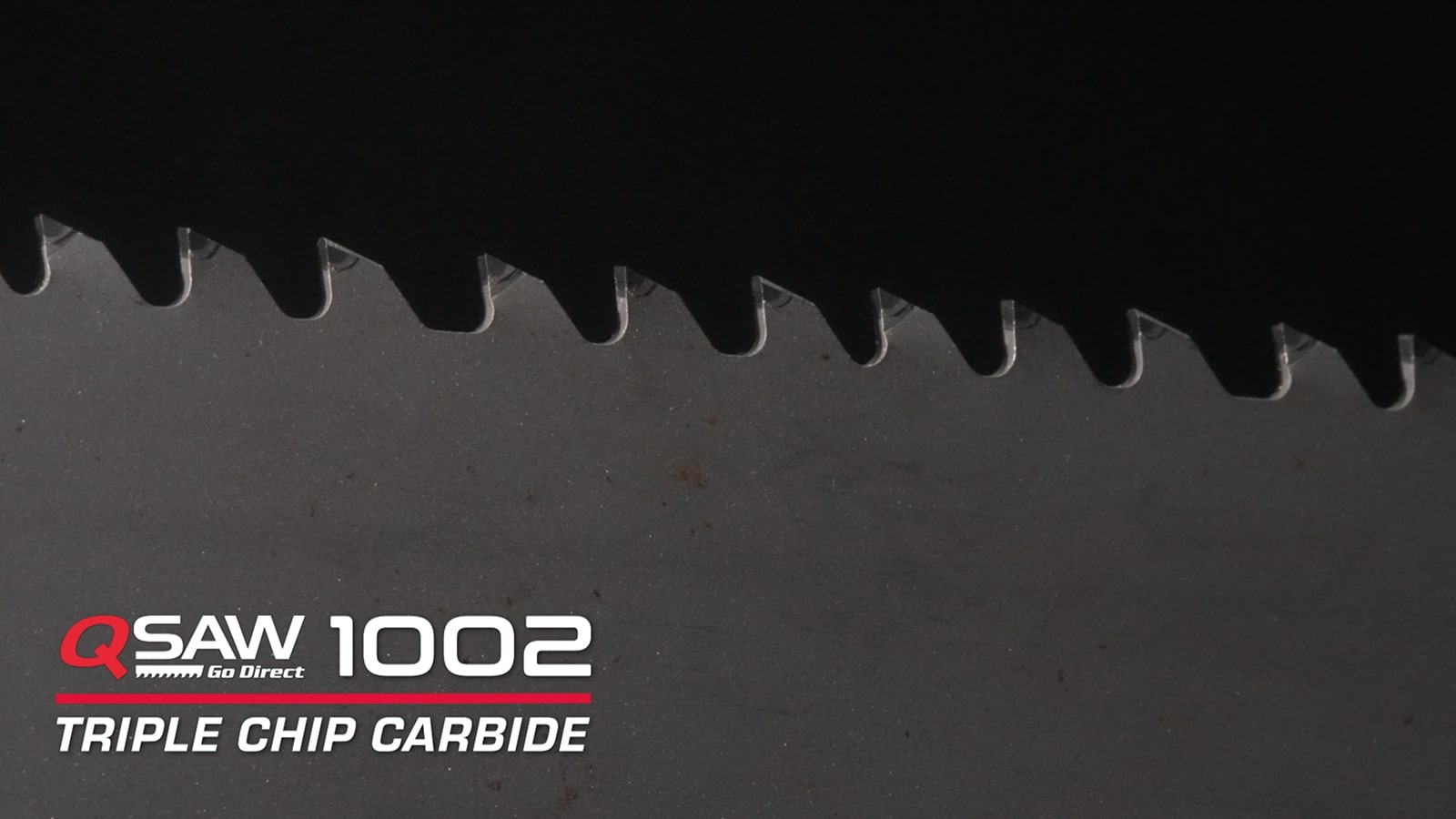
Q1002 Carbide Blade